
Secrets
The biggest secret in snowboarding, the most taboo subject, that you will rarely read about in snowboard magazines is …
 You Don’t Have to Hurt
Yourself to Snowboard
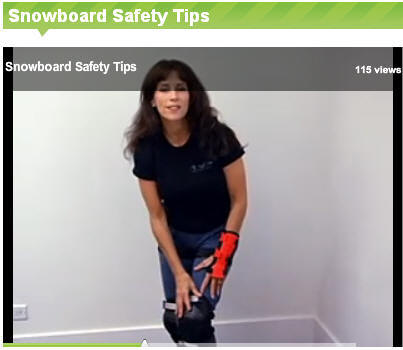
Learn to Snowboard Safely
by Lauren Traub Teton
| Get your own free subscription to the Snowboard Szine. Know what’s happening for snowboarders. Be entertained. |
Are you thinking of trying snowboarding, but reluctant because you’ve heard that you’ll be bruised after the painful edge-catching falls of the first three days? We hear this from skiers and potential snowboarders all the time.
Have you tried snowboarding but thrown in the towel because it hurts too much when you fall?
We have learned and practiced the secrets that can help keep you from getting hurt as you learn and progress. Read on.
Snowboarding Gear to keep you Safe and Comfortable as you Learn to Snowboard
“I wear ALL this gear EVERY time I ride. I would not ride without it. I have been wearing protective gear since my first session, and I have not had a snowboard injury worth complaining about in my 4 years on a snowboard.”
— Lauren
See the Flexmeter Team and Videos here!
In a Hurry?
Just scroll down to to read your favorite Sub-Headings.
|
Blah, blah, Lauren – I don’t have time to read all this. |
===========================================
Snowboarding without Injuries.
Snowboarding without injuries is our goal for our readers (and ourselves!). If you wear protective snowboard gear you will greatly reduce the odds of hurting yourself when you snowboard. You will not have to worry as much about possible pain and injury on the slopes, and you can relax and enjoy the ride.
Main Points of Impact with Snow and Ice.
When you ride, the main points of impact where your body will meet the snow or ice are predictable. If you ski, you may fall in a variety of interesting tangles. But as a snowboarder, we can pretty much tell you that your knees, hands and wrists, buttside or tailbone, and head are the target zones.
Who Needs to Wear Snowboard Protective Gear?
Almost everybody needs to wear Snowboard Protective Gear.
When you are a new rider, you will fall often. When you are experienced, you will fall less often, but with more at stake since you will be going bigger, and faster. That means falling harder and farther. All the more reason to wear snowboard safety equipment.
Who Does Not Need to Wear Snowboard Protective Gear?
If you fall into either of these categories, perhaps you do not need snowboard protective gear.
 |
If you never want to increase your skill at snowboarding, never want to ride faster or learn new tricks, and you only ride on soft deep, fluffy powder, on uncrowded slopes, well, then maybe you don’t need protection. |
|
Or if you enjoy bruises, pain, and the possibility of not being able to snowboard for a while due to injury, then maybe you don’t need protection. |
With a little planning it’s fairly easy to protect your precious body parts. You will hurt less and have a lot more fun if you protect yourself with the proper snowboarding equipment and snowboard apparel.
Most Websites and Magazines Do Not Discuss Snowboard Safety.
Most websites and magazines do not discuss snowboard safety and protection for the snowboarder. Apparently to them there is something stoic and admirable about enduring needless pain. We disagree. We want to spend quality time on the slopes, not nursing bumps and bruises on the sidelines. We want to enjoy snowboarding for years to come, instead of sustaining slow-healing injuries that can become chronic and arthritic. We are old enough and smart enough to know how to take good care of our bodies, and we see what happens to our friends who don’t.
Why do I (Lauren) still wear this stuff even though I am a Good Rider?
I wear ALL this gear EVERY time I ride. I would not ride without it.
Why do I still wear this stuff even though I am a good rider and have been riding for years?
Because:
|
I am always pushing to learn more and do more on the slopes. |
|
I jump, ride the pipe, and rails, and push myself to ride faster. And when you try new things, it is a lot of fun, but you have to learn how to do them. And sometimes you fall in the process. |
|
I ride in the East and yes, it’s sometimes icy here. |
|
I am well past 30 years old. |
|
I love the comfort factor of being able to fall and not hurt myself. |
|
I have used this gear since my first season, and it works. |
|
And I don’t care what anyone thinks about me and my gear. Especially people not savvy enough to wear protective gear themselves. |
Here’s how to Be Smart and Protect Yourself Snowboarding, Whether it is your 1st time out or your 201st
Knee Protection for Snowboarders
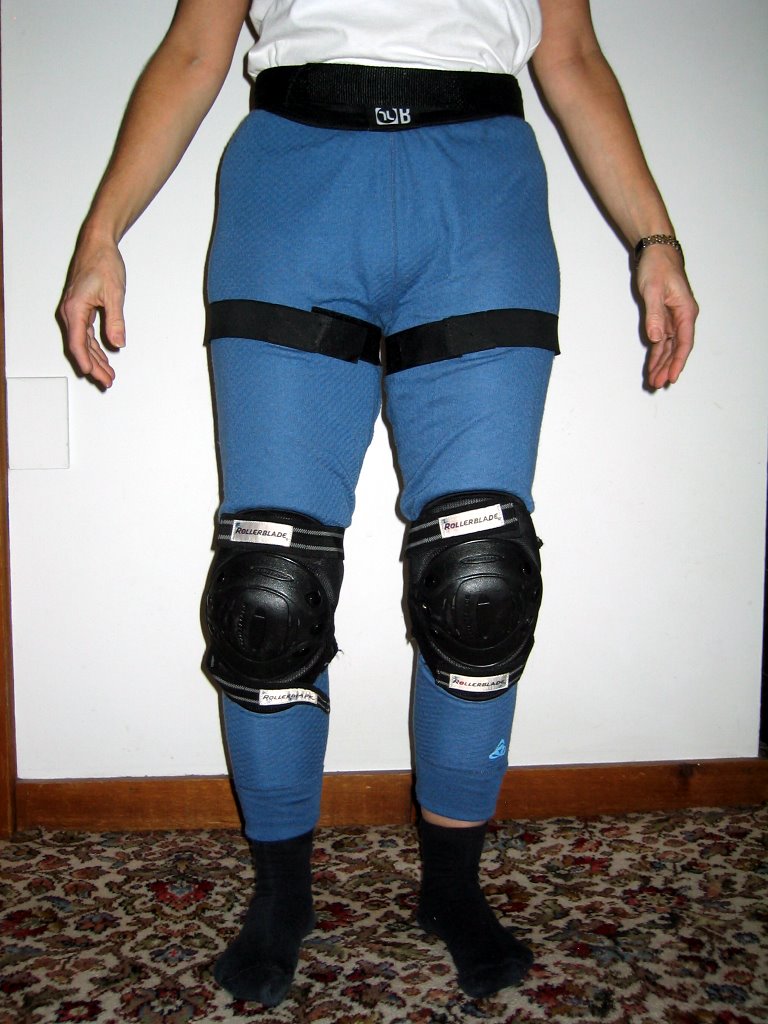
I think this is the most important piece of snowboard protective gear. Yes, you will also fall on your butt, but you do have some natural padding there. Your knees are bony and vulnerable. And they are complex joints that are painful and expensive to fix. If you end up needing surgery, the recovery time from knee surgery is long and slow, if you do recover fully. You might even miss a season of snowboarding if you have to have knee surgery.
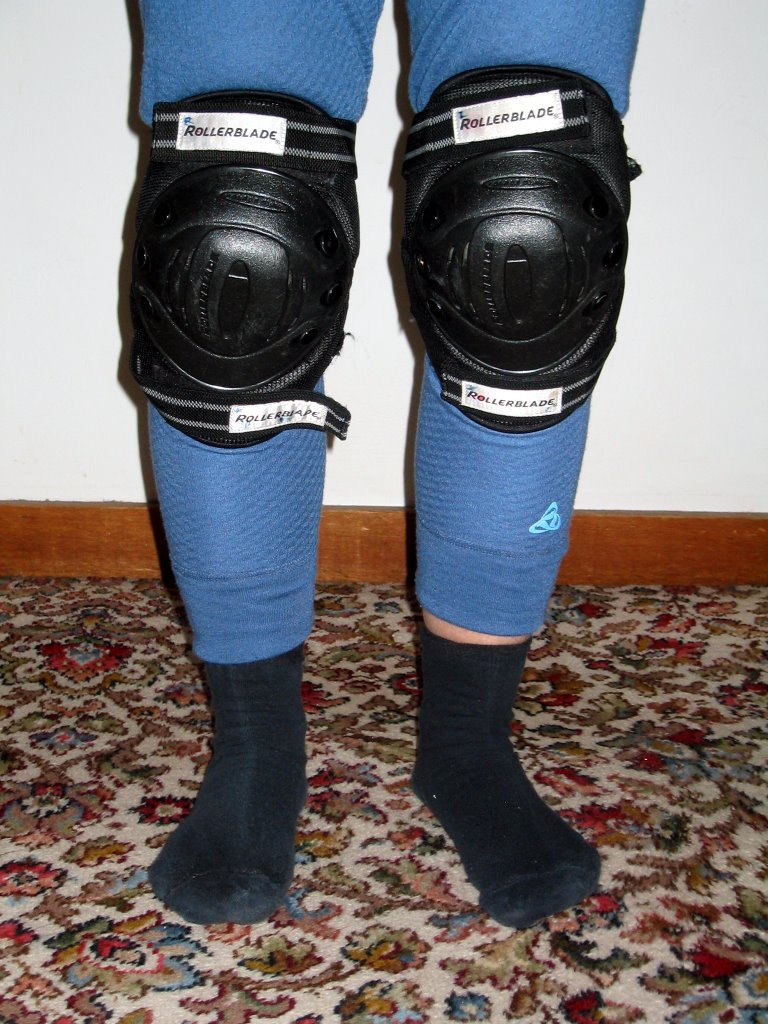 I have been more than happy wearing my Rollerblade TM knee pads. Wear them beneath your snow pants. Whatever brand you get, make sure they are soft and well- padded on the inside and hard plastic to absorb shock and protect on the outside. Good pads will also keep your knees warm and flexible, and you can relax so much more knowing that a fall forward is not going to be painful and damaging. Beginners fall on their knees often.
Believe it or not, good knee pads also help to protect your wrists, because knowing that you can fall forward safely on your knees means you don’t have to try to catch yourself with your hands. Falling with your weight on your hands wide open on the snow is a good way to break a wrist.
Hand and Wrist Protection for Snowboarders
Falling forward with your weight on your hands is a good way to break a wrist. Fists should be balled up, with your thumb outside, as if you were ready to punch someone. Try to relax and fall evenly on your protected knees, and forearms. You should wear good protective knee pads so you can distribute the weight on both your knees and hands.
Some experts and research studies advise wearing in-line skate type wrist guards, and some argue that these can increase the severity of a fracture.
For those of you who need your wrists for work and play and don’t always fall right, a new snowboard-specific safety glove and wrist guard is now on the US Market. Called Flexmeter, made by DocMeter, it was designed by French Emergency Room physician Marc-Herve Binet who has worked on thousands of snowboard fractures, and it is supposed to reduce snowboard wrist injuries by 67% or more. Read about the new Flexmeter snowboard safety glove and wrist guard.
See the Flexmeter Team and Videos here!
Butt and Tailbone Protection for Snowboarders
“But I have plenty of natural padding on my butt.”
People sometimes say to me “But I have plenty of natural padding on my butt.” Forget it. You need padding that is not connected to your central nervous system.
If you’re a beginner and if you don’t have anything else, you can slide some bubble wrap down the back of your pants. Use plenty! You’ll hear the bubbles pop when you fall and you’ll be glad you wore it. And you will have saved a lot of jarring to your spine as well as wear and tear on your buttocks and tailbone.
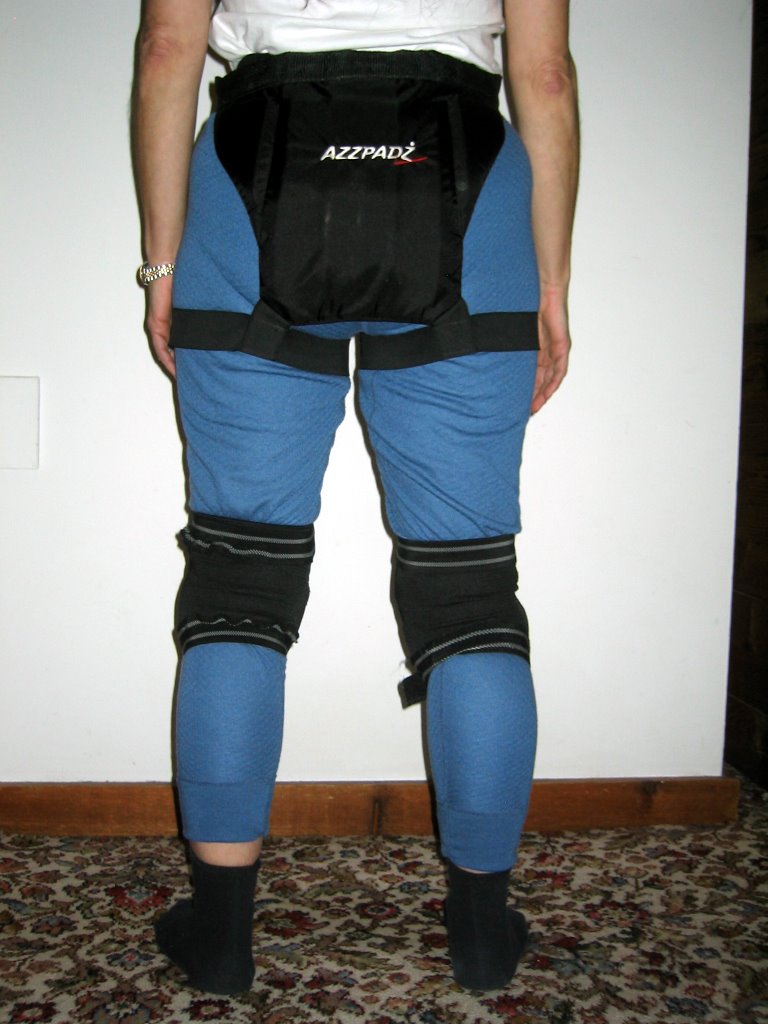 Once you’re convinced of the need to save your posterior, invest in some real padding. One of my favorites is Azzpadz, invented by snowboarders for snowboarders. Easy on, easy off. Hard plastic outside, soft padding on the inside. They’ll hardly be noticeable beneath your snow pants and they really work.
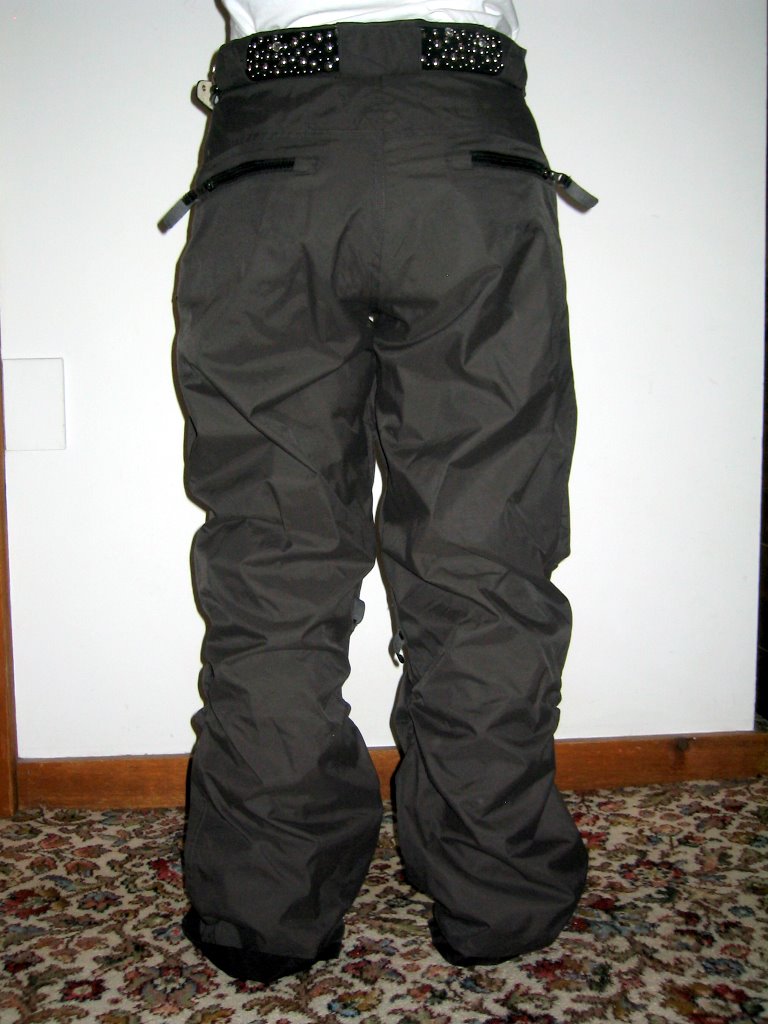 I also like Pro-Tec Impact shorts, made for skaters and I used them for years snowboarding before I discovered Azzpadz. The Pro-Tec Impact shorts are a pull-up mesh short with lightweight, hard hip and butt pads.


You might think (mistakenly) that helmets are only for people who ride in the trees, or do big tricks. But the first time you catch an edge and go CLUNK! and the back of your head hits the hard hard ground, you’ll reconsider. This can happen so suddenly and unexpectedly that you won’t know what hit you. But it was the ground. Sometimes this even happens to experienced riders. A helmet also adds the comfort of warmth and dryness, as well as cushioning your brain. With a helmet on, you can ride in the rain comfortably, and have the slopes to yourself. (Well, just you and the other smarties.)
You should buy a helmet in person. Correct fit is mandatory and tricky. Get expert help at the snowboard shop to be sure the helmet fits. And have your helmet checked for safety and fit next season if you fell on it a lot or grew dreds or shaved your head since you purchased it. If you want to be sylin’ don’t unknowingly make the fashion faux pas that I once did – buying a SKI-style helmet instead of a snowboard-style helmet.
This one is optional, but *I* wouldn’t ride without having a drink of water handy. Snowboarding creates heat. It is a real expenditure of energy. You will feel the heat that your body generates. That means you are perspiring, even when it’s cold. Where do you think all that moisture in your boots comes from?
To replace the water lost perspiring and breathing the dry winter air, I enjoy a refreshing sip of water from my handy Camelbak hydration system. It is a backpack with a water bladder, and a tube to deliver the water to your mouth. Simple and efficient. Just grab the tube, bite the valve on the end, and sip. It’s so smooth to use that you can easily do it while sitting on the lift. You can wear it outside your coat, or even under it on freezing days.
Even if you’re not riding big mountains where you are away from the lodge for hours, it’s nice to hydrate regularly. Stay hydrated with water, and you will be able to ride longer and better. And you can do tricks and ride the pipe while wearing a small hydration backpack, no problem. You can also throw an extra clothing layer, energy bar, tool set, or whatever in the hydration backpack. The backpacks come in many different sizes and configurations.
It’s just as important to protect your trusty ride when you get off it. Check it at the lodge, or lock it with a small cable lock that you carry in your backpack. Also register it online now at
http://www.SnowboardRegistry.com so if it does disappear, you at least have a chance of getting it back. And be a good citizen of the snowboard universe. Before you buy a used board, check its serial number at http://www.SnowboardRegistry.com to make sure it wasn’t reported stolen.
Unlike with skating and surfing, you DON’T have to endure pain to learn and ride your snowboard. Respect yourself. Dress for safety and comfort on the slopes, and you’ll come back to ride happily many a day.
No Responses to “Secrets”